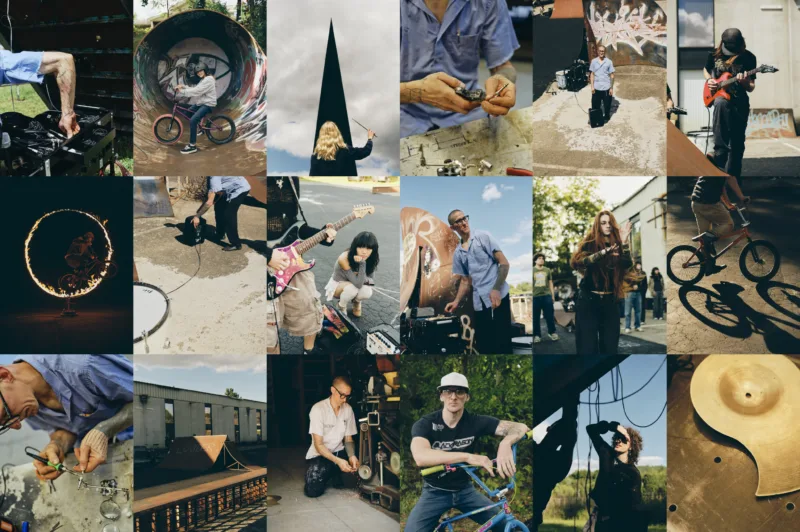
"A sincere love letter to my little scene." CONTACT: A VERY UNIQUE BMX DOCUMENTARY
An interview with the filmmaker Jonathan Walley
Interview and intro by Brian Tunney | Contact photos by Buck Harlan Squibb
A few weeks back, instead of reverting to Seinfeld reruns, the algorithm recommended a unique documentary to me titled Secret Mall Apartment. The premise of the film was just as you’d suspect: a group of artists in Providence attempt to reclaim some of the city’s post-industrial architecture by transforming former work space in a newly constructed mall into a secret, slacker-friendly apartment.
The land that the mall sits on was formerly inhabited by the art/punk/DIY subcultures surrounding Providence. And the Secret Mall Apartment became an embodiment of living art project turned cultural reclamation in a city where post-industry had met its end, replaced by private capital, government kickbacks, and Auntie Anne’s Pretzels.
Jonathan Walley’s new film, Contact, is not a land protest documentary. But it’s emblematic of the organic ways in which art unfolds in the post-industrial areas of the Northeast US. As the rust belt continues to rust, new generations of people come to inhabit the area and discover ways in which they can make the area home.
Naturally, low budget BMX scenes thrive in these areas. And Walley focused on one particular individual making waves in the Triple Cities area of upstate New York. You might remember Derek Nelson from Road Fools 13 and his skatepark HCS. Well, he’s still riding homemade bikes and destroying pianos in the process. But he’s also leaning into the more sonic side of metal fabrication, BMX, skateboarding, and community in the Johnson City area.
The result is a beautifully crafted film of a unique rider's personality, and a sound experiment unlike anything ever seen in BMX. Recently, we spoke with Walley about the making of Contact and working with an upstate N.Y. legend.
Also, I cannot stress this enough: Even if you dislike documentaries or have no interest in the concept of sound experiments, Contact is worth watching for the way in which Derek Nelson thinks, and how he rides his bike. He moves differently. His ideas are progressive, and the homemade bike he rides creates a very unique palette from which he builds new techniques. Derek is still opening up a new realm of possibilities on a bike that looks like a stretch limousine.

Related Video
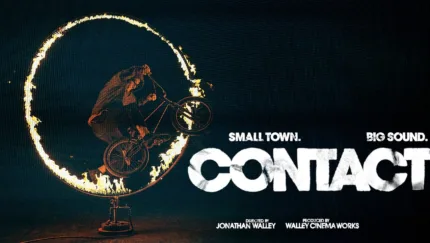
CONTACT - OFFICIAL TRAILER
Anyone remember that guy on the wild bike in Road Fools 13? - More Info
"Derek hit me up last year and told me what he was looking to do and asked if I would be interested in shooting it. It was a no-brainer for me. I am a big music lover, so the blend of riding, experimentation, and sound really pulled me in."- Jonathan Walley
Could you give us some background on your history in the Triple Cities, your relation to BMX, and your background in filmmaking?
I grew up in a small town called Vestal, which resides next door to Binghamton, NY. Geographically, our town sits pretty much on the border of Pennsylvania and is referred to as the Southern Tier, aka the Triple Cities. It’s overcast most of the time, full of odd characters, shitty street spots, and some of my favorite people on the planet.
I started riding when I was in 7th grade after I found this incredible Dave Mirra tips and tricks video at Best Buy haha. I met my homie AV ( Owner of GRINDWORKS ) in high school, and he became my closest riding buddy along with a blend of kooks from our neighborhood. Andy ( AV ) has always been a really incredible rider and really embodied the strangeness of our town in the best way. Highly technical, shoots big gaps at random, and also is not afraid of doing some silly goofy shit. Just one of the best. As I progressed together with Andy, I really gravitated towards filming. I was just in love with video culture at the time; it was an escape I could take home with me on those bone-crushing winter days. We spent lots of time at very bad trails ( shout out Circle Dr ), busted street spots, and eventually, we found East Coast Terminal. That was a big shift in my perspective about BMX. Being exposed to a completely new level of riding and terrain was a huge fucking learning curve, but it pushed me more than ever. Soon after that, I heard about this infamous place called HCS, and this crazy dude who ran it named Derek, Nelson. That was the moment everything changed. I’ll put a pin in that and talk briefly about my filmmaking journey.
I studied film in college, but it was more like drinking 40’s in the parking lot and parties while scoping spots around campus at first. I got my shit together a few years in and started to find my voice as a filmmaker with my first documentary film, Hacer. I moved up to Boston after school and lived there for about 12 years, fucked up my knee, and kind of quit riding for a while and started working in advertising. I made some cool shit, learned a ton, and then got tossed out on my ass to learn how to freelance. Anyone who has ever worked in the Ad world knows the game; you just get back up and hunt for the next thing. Work got brutally slow post-COVID, so I started making movies again as an outlet, that brings us to the present.
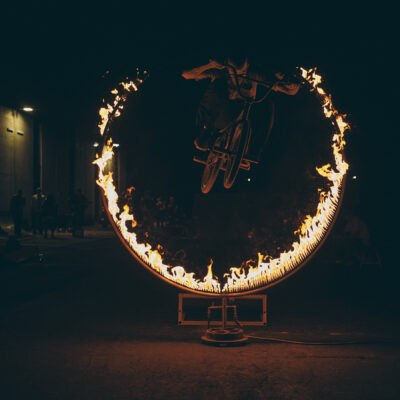
I think a lot of us knew about Derek Nelson from Road Fools 13, but he flew back under the radar almost immediately after that video dropped. I'm assuming you had some familiarity with his exploits at HCS, and also his fabrication skills. What attracted you to working with him?
Derek going on Road Fools was a big deal for our little crew. I had known him for a minute by that time, and I had become a regular park rat by then. He was still riding the bike he made himself, and I think that was all anyone could focus on during that trip. I can’t blame them though. That thing is insanely hard to ride, but that’s ( probably ) why he liked it. That bike allowed him to carry an insane amount of momentum, which allowed for lots of new possibilities trick-wise and just more raw power. One of the things I learned early on was Derek’s commitment to challenging himself, and the bike was just an extension of that. Our sport is full of legit, underappreciated athletes, and Derek is one of the most talented I have ever seen of the lot. Derek has always been kind, and supportive of riders and skaters of ANY level in their development, and an advocate for building community for those on the fringes. This is why we called HCS our home growing up and what led me to my new film, Contact, as a way to reconnect and support the scene in a new way with our shared perspective and skills.
I found myself wanting to see more of Derek's original riding style as Contact progressed. Have you shot with him in the past?
My film Hacer was also a documentary with Derek as the main participant, but all of the riding stuff in between the two documentary films was shot with his brother, Andy Nelson, and a bunch of other cats that rode the place. One of my favorite things is to just watch him ride; it’s a spectacle in the best way.
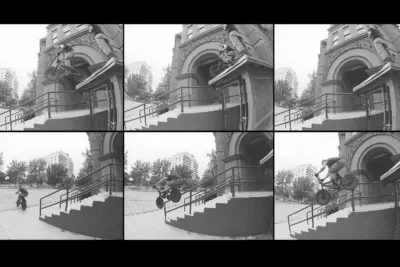
Derek Nelon and 'that' bike. Road Fools 13, 2004. Photos by Brad Puck Byrne. Originlaly published in DIG issue 41.
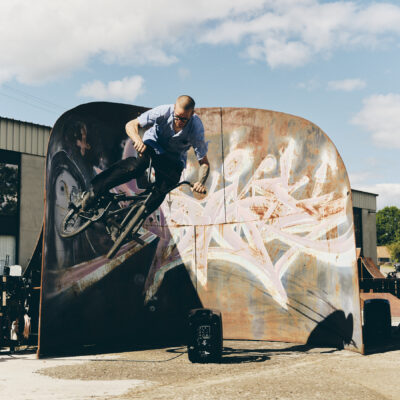
Say I'm coming in dark to watch this project: how would you sell it to me?
You take equal parts nostalgia, riding, music, chaos, and throw them in a blender. Contact is what comes out the other side. It’s an examination of process and transformation wrapped in a sincere love letter to my little scene.
I had just watched that Secret Mall Apartment documentary a few weeks ago, and while watching Contact, I was reminded of the art for art's sake statement that came with the film. What attracted you to documenting this unique sound experiment? And how important is it to you to document a project that might not make sense to the average person?
Derek hit me up last year and told me what he was looking to do and asked if I would be interested in shooting it. It was a no-brainer for me. I am a big music lover, so the blend of riding, experimentation, and sound really pulled me in. The film is about the process of creating the immersive sonic installation, but there is also a lot of subtext for the viewer to chomp on. As far as making something accessible, I didn’t really worry about that too much. The story will resonate with an audience, but it’s not up to me to say who that audience can be. I just guide it out there.
Through a BMX lens, the Triple Cities scene was largely carried by the presence of FBM for years. But after Crandall left and FBM shut down, the scene kept happening at an organic pace. How would you describe the Triple Cities scene through this post FBM lens?
I actually connected with Crandall for a Bobcat commercial down in RVA, and that shoot got me so stoked to get involved with riding again, so FBM will live forever to me. That’s the magic of Binghamton and the surrounding area. We have been left to fend for ourselves many times over, but it’s the legacy that was left behind by FBM, HCS, ECT and a slew of others and a real ethos of DIY that keeps the scene alive. The scene is alive and well, and it’s evolving into something new. HCS is not just a skatepark anymore, it’s a space for artists, musicians, and riders, which is a pretty unique thing. John Corts @WorkBMX is also going strong and burning the candle on that end of the scene, killer frames, and an incredible team.
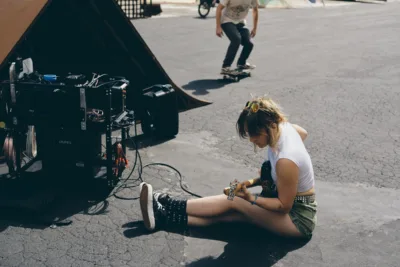
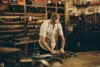
"Derek has always been kind, and supportive of riders and skaters of ANY level in their development, and an advocate for building community for those on the fringes."
- Jonathan Walley
And do you think Derek and HCS have been able to transform Binghamton into "worth staying for”?
That depends on your mindset. You have to put in the work to see the value, and there is a real reward for those that do. There are surprising benefits to living in a post industrial town with space to roam and places to create; you just have to reclaim it. No one person can transform an entire town, but you can change the way people think about where they are and how they see the world.
How did you fund this project?
Contact was mostly self-financed. I did have grant support from Binghamton University and the Rotary Club of Vesal, NY. Hell yeah, Rotary! We also received support from Expressway cinema rentals, Rob Bessette at the Color Refinery and some very good homies, Buck Squibb and Sean Hoffman. Y’all are the best.
What's your final goal with Contact?
Final goal after our festival run and private screenings is to jump online (here on DIG) or hopefully land a distribution deal. Right now we are waiting patiently for our first official selection at film festivals, fingers crossed.
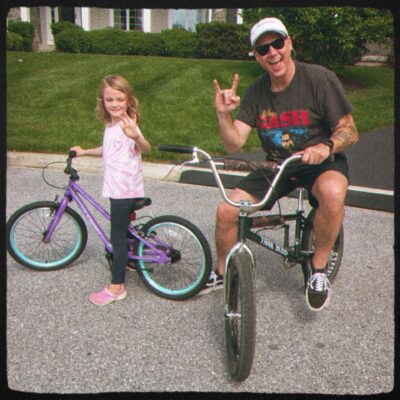
Jonathan Walley
"I really gravitated towards filming. I was just in love with video culture at the time; it was an escape I could take home with me on those bone-crushing winter days. "- Jonathan Walley
Jon Walley. VX days.
Previous
"I just wanted to make something for the BMX community" - Edwin De La Rosa and "4130"
Edwin's BMX book gold
Next
Corey Walsh – "This is a rebellion towards things that can't be done"
Corey talks about his Vans and Cult 2025 video parts, both released in the same week.
Related Content


Latest Content

DIG Partner stores


More Features